How to select precision fasteners for electronic devices begins with the joint, not the catalog. A tiny screw can hold a camera module steady, ground a metal shield, or damage a circuit board if it is too long. Richard T. Barrett, author of NASA’s Fastener Design Manual, offers a valuable engineering reference for understanding fastener behavior. A practical paraphrase of his design approach is: “Choose the fastener for the joint’s real loads and conditions.” Small parts matter.
For electronics, selection means balancing size, strength, material, thread type, and installation method. A stainless-steel screw may resist corrosion, but it can create problems if the surrounding metals are incompatible. A fine-pitch thread may suit a thin enclosure, while a poorly controlled torque can strip its threads. Vibration, repeated servicing, temperature changes, and electrical grounding all deserve attention. So does the assembly line: a fastener that is hard to position can slow production or invite mistakes.
This guide examines how to match fasteners to device materials, clearances, loads, and service needs. It also considers tolerances, coatings, and practical testing before a design reaches production. Not every choice has a perfect answer. I have seen a seemingly minor length difference complicate an assembly, and that detail is easy to overlook on a drawing. Careful selection reduces those surprises and helps protect both the product and the people assembling it.
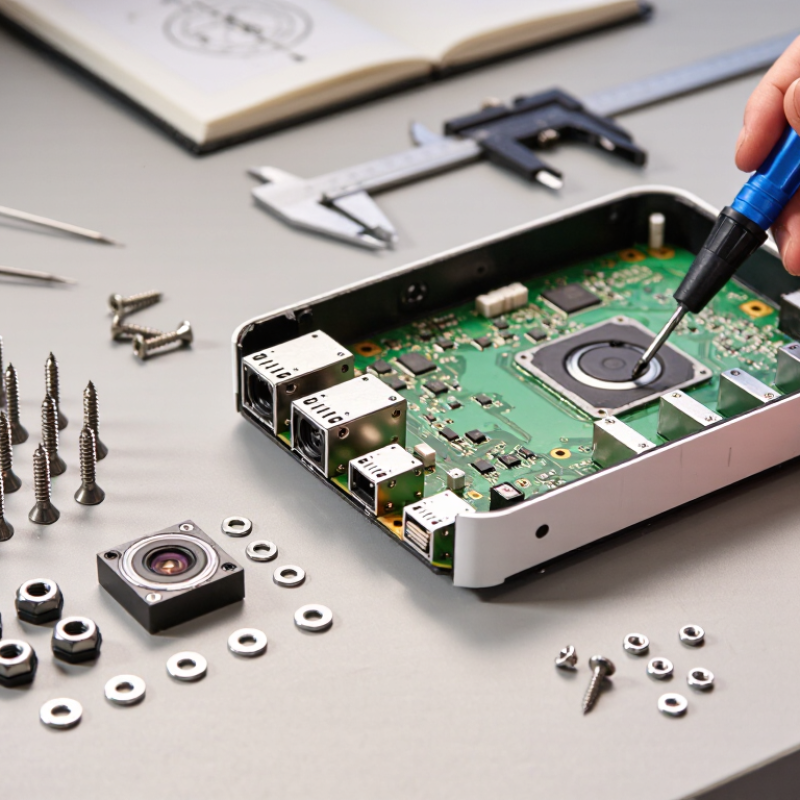
Define the Mechanical and Environmental Requirements
Before choosing a precision fastener, map the loads it will actually see, not just the values on a drawing. A small enclosure may experience vibration from a fan, repeated opening, or stress when a connector is inserted. Estimate clamp force, thread engagement, panel thickness, and space for a driver. Measure twice.
Then define the environment. Note operating temperature, humidity, cleaning fluids, dust, and possible condensation. A fastener that works on a clean bench may loosen or corrode inside a warm, tightly packed device. Check contact with nearby metals, too; dissimilar materials can accelerate corrosion when moisture is present. It happens quietly.
Use these requirements to compare material, coating, head style, and locking method. For serviceable products, choose a drive that technicians can reach without scraping nearby components. If vibration is expected, validate the joint under representative conditions rather than relying on a locking feature alone. Keep tolerances realistic: tiny parts can vary, and assembly tools are rarely perfect. One easy-to-miss detail is cable clearance. It can matter more than a stronger screw. Record assumptions, especially when the device’s real operating environment is not yet known.
How to Select Precision Fasteners for Electronic Devices? — Define the Mechanical and Environmental Requirements
Compare the joint’s required strength with the fastener material and property class. These minimum values apply to the listed steel property classes under ISO 898-1; they are not allowable design loads. Also define vibration, temperature, corrosion exposure, and any coating or electrical-isolation needs before selecting a fastener.
Choose Fastener Materials, Sizes, and Thread Types
Selecting precision fasteners starts with the housing and the environment. Stainless steel resists corrosion, while aluminum reduces weight but can gall during repeated assembly. For plastic bosses, use thread-forming screws designed for plastics; machine screws suit metal inserts and tapped holes. Choose the thread pitch and head style to match the material, tool access, and expected service cycles. A tiny mismatch can damage a boss.
Size the screw against the full stack-up, not just the outer panel. Check grip length, clearance, insertion depth, and thread engagement. Too much length may contact a battery or circuit board; too little can strip the threads. Grand View Research’s 2023 industry report valued the global fasteners market at US$90.6 billion, reflecting the broad scale of fastener use. Yet market-wide figures cannot replace testing on your exact enclosure. NASA’s Fastener Design Manual also warns that friction affects torque-based preload, so tightening torque alone is an imperfect control.
Tips: Test a sample assembly. Inspect the plastic boss for whitening or cracks, then recheck after repeated opening. Keep screws away from board traces and components. And document the chosen size—easy to forget later.
How to Select Precision Fasteners for Electronic Devices? — Choose Fastener Materials, Sizes, and Thread Types
| Device Area or Requirement |
Typical Fastener Material |
Common Size Range |
Typical Thread Type |
Selection Considerations |
| Small internal brackets and shields |
Stainless steel, such as 304 |
M1.6–M2.5; common coarse pitches include M1.6 × 0.35, M2 × 0.4, and M2.5 × 0.45 |
ISO metric coarse thread |
Provides corrosion resistance for many indoor applications. Check the enclosure material and required clamping load; stainless fasteners can gall, so use controlled tightening and compatible mating materials. |
| Chassis joints and moderately loaded metal assemblies |
Alloy steel, often with a protective coating |
M2–M4; common coarse pitches include M2 × 0.4, M3 × 0.5, and M4 × 0.7 |
ISO metric coarse thread |
Useful where higher strength is needed. Confirm coating, corrosion exposure, electrical bonding needs, and compatibility with the chassis. Avoid excessive torque in thin sheet metal. |
| Conductive terminals, grounding points, or electrical contacts |
Copper alloy, such as brass |
M2–M4, selected to match the terminal and available thread depth |
ISO metric coarse thread; use a finer pitch only when specified by the mating component |
Brass is conductive and readily machined, but generally has lower strength than steel. Verify contact resistance, current requirements, surface finish, and corrosion compatibility for the application. |
| Lightweight assemblies and non-magnetic design constraints |
Aluminum alloy |
M2–M4, with thread size chosen to suit the joint load and material thickness |
ISO metric coarse thread |
Offers low mass, but aluminum threads can be more vulnerable to stripping than steel threads. Check engagement length, repeated assembly requirements, and galvanic compatibility with adjacent metals. |
| Electrical isolation or protection against surface scratching |
Nylon or another specified engineering polymer |
M2–M4, subject to the component design and polymer strength |
Metric machine thread where a matching threaded insert or nut is provided |
Can provide electrical insulation and reduce metal-to-metal contact. Account for lower stiffness, temperature limits, creep, and reduced load capacity compared with metal fasteners. |
| Fine adjustment or compact precision mechanisms |
Material selected for the load and environment, commonly stainless steel or alloy steel |
For example, M3 × 0.35 fine pitch where the design specifies it |
ISO metric fine thread |
Fine threads provide smaller axial movement per turn and may suit limited adjustment space. Confirm the exact pitch and matching nut or tapped-hole specification; do not substitute for a coarse thread without checking the design. |
Design note: The sizes and applications shown are typical examples, not universal specifications. Confirm the fastener standard, head and drive style, thread engagement, installation torque, temperature range, vibration exposure, and material compatibility against the device design.
Check Electrical, Thermal, and Corrosion Compatibility
Precision fasteners can affect more than mechanical strength inside an electronic device. Start by checking whether the joint must conduct electricity or remain electrically isolated. A conductive screw may support grounding, but paint or plating can raise contact resistance. Keep contact surfaces clean, and verify continuity after assembly. Small details matter.
Thermal behavior deserves the same care. A fastener and housing can expand at different rates during repeated heating, loosening a joint or stressing a circuit board. Compare their materials and operating temperatures, then test the assembly through realistic temperature cycles. Corrosion is another practical concern, especially near vents or in equipment exposed to humidity, salt, or cleaning fluids. Dissimilar metals can corrode where they touch; compatible materials or suitable coatings may reduce that risk. Yet coatings can change electrical contact, so the best choice is not always obvious. Check the actual contact points, not just the material names on a specification sheet. A small sample assembly can reveal issues before the design is finalized, though it will not reproduce every service condition. That limitation is easy to overlook.
Match Fastener Design to Assembly Methods and Tolerances
Selecting precision fasteners starts with the assembly method, not just the screw’s diameter. A hand-driven repairable unit may suit a standard drive, while a high-volume line benefits from fasteners that feed and seat consistently. Small details matter. Check tool access around connectors, boards, and narrow enclosures before fixing the head style. A captive screw can prevent loose parts from falling into a device, but it needs enough clearance to swing or travel without scraping nearby components.
Tolerances determine whether a fastener fits reliably across real production parts. Review the full stack-up, including housing thickness, coating, and board position. Too little thread engagement can weaken the joint; too much can bottom out against a delicate component. A shoulder or controlled-length screw may help when the clamping distance must stay predictable. Set torque limits for the materials involved, especially with soft plastics or thin aluminum. That sounds obvious. Yet it is easy to overlook after a successful prototype. Test assemblies at tolerance extremes, not only with nominal parts, and record any cross-threading, gaps, or board movement. The first choice may still need revision. That is useful evidence, not a failure.
Verify Performance Through Testing and Quality Checks
Testing should confirm that a precision fastener performs well in the actual device, not only on a drawing. Check thread dimensions, head height, and coating thickness with calibrated gauges. Small errors matter. A fastener that sits slightly proud may interfere with a connector or enclosure. Record measurements by production lot, and keep the inspection method consistent.
Assembly trials can reveal problems that measurements alone miss. Use the intended driver bit and monitor installation torque. Check for stripped threads, uneven seating, and damage to nearby circuit boards. Then inspect sample units after vibration and temperature cycling. Look for loosening, cracked supports, or changes in electrical contact. Test the assembled product, since materials and joint design affect performance.
Quality checks should continue beyond initial qualification. Set clear acceptance limits, document tool calibration, and review defects as they appear. If a fastener fails, compare the affected lot with retained samples before changing the design. A test plan can still miss an unusual use condition; that is worth admitting. Add a focused test when field feedback points to a gap, rather than assuming earlier results cover every case. Keep records concise enough for technicians to use, but detailed enough to trace each result.
Conclusion
How to select precision fasteners for electronic devices begins with understanding the demands of the application. Consider the loads each fastener must withstand, available space, vibration, temperature changes, and exposure to moisture or other environmental conditions. Then choose suitable materials, dimensions, and thread types to provide reliable clamping without damaging delicate components or taking up unnecessary space.
Compatibility and assembly also matter. Check whether the fastener could affect electrical insulation, heat transfer, or corrosion resistance, and match its head style and drive type to the tools and assembly process. Account for manufacturing tolerances so parts fit consistently, even in compact designs. Before finalizing a choice, test fasteners in representative assemblies and inspect fit, retention, and resistance to expected conditions. These checks help identify problems early and support dependable performance throughout the device’s service life.

 VLC Part