How to Extend the Service Life of Metal Fasteners?

Time:2026-09-06 Author:Sienna
0%

Metal fasteners often look simple, yet their service life depends on several interacting conditions. What affects the service life of metal fasteners includes corrosion, load, temperature, moisture, installation torque, material choice, and contact with dissimilar metals. A stainless-steel bolt may resist outdoor humidity, but salt deposits can still create aggressive corrosion cells beneath its head. A carbon-steel screw can fail faster when its protective coating is scratched during installation.

Herbert H. Uhlig, a respected corrosion scientist, defined the underlying risk clearly: “Corrosion is the destructive attack of a metal by chemical or electrochemical reaction with its environment.” His statement remains highly relevant to fastener maintenance. Moisture, oxygen, chloride contamination, and trapped dirt can gradually reduce a fastener’s effective cross-section. The damage may remain hidden until threads strip or the head fractures.

Good practice begins with inspection, not assumptions. Check for rust staining, pitting, loose joints, damaged coatings, and unusual torque changes. Select materials according to the actual environment, not appearance alone. Use compatible washers, avoid unnecessary metal contact, and apply suitable anti-seize products when specified. Keep drainage paths open. Small details matter.

However, no maintenance plan is perfect. Coatings can fail earlier than expected, and torque readings can mislead when threads are dirty. Conditions also change after installation. A sheltered assembly may later face condensation, cleaning chemicals, or coastal air. Extending service life therefore requires records, periodic inspection, and honest review of failures. That discipline turns fasteners from overlooked components into monitored parts of a reliable system.
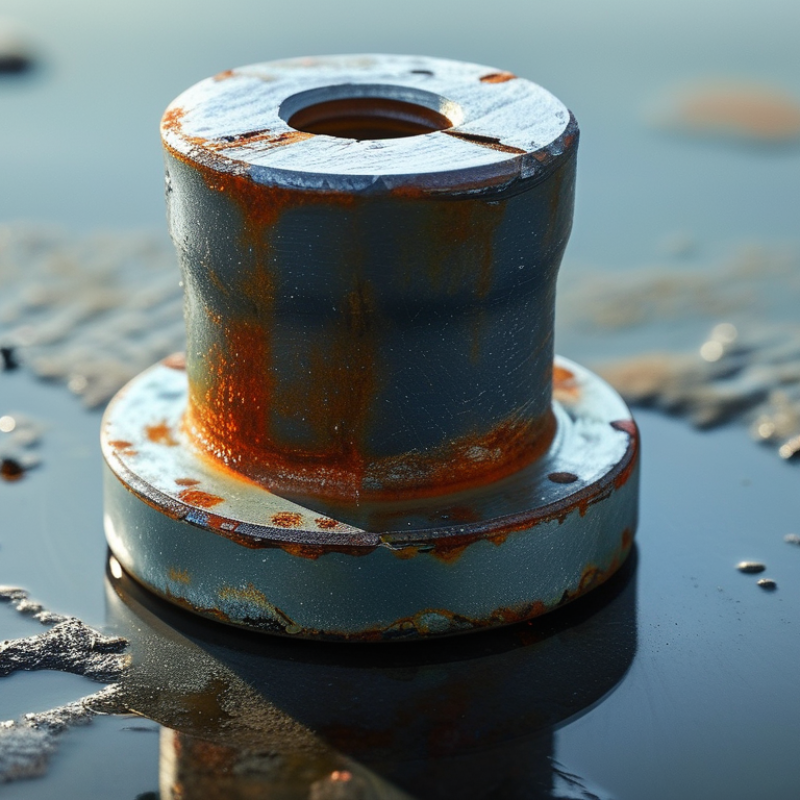
How to Extend the Service Life of Metal Fasteners?

Classify Exposure with ISO 9223 Corrosivity Categories C1–CX

How to Extend the Service Life of Metal Fasteners?

Classify Exposure with ISO 9223 Corrosivity Categories C1–CX

Metal fastener life begins with the surrounding atmosphere. ISO 9223 classifies atmospheric corrosivity from C1 to CX.

C1 describes very low exposure, such as a clean, heated office.
C2 covers low-risk indoor spaces and rural outdoor locations.
C3 includes urban air and moderate industrial environments.
C4 applies to industrial areas and coastal zones with noticeable salt exposure.
C5 represents very high corrosivity.
CX addresses extreme marine or industrial conditions.

Do not treat the category as a guaranteed service-life label. It describes atmospheric corrosion conditions, not every joint detail. A fastener under a leaking roof may corrode faster than its site category suggests. Chloride deposits can collect beneath washers, threads, and overlapping plates. A clean-looking surface can be misleading. Check these hidden areas during inspections.

Select materials and protective systems for the real exposure, not the sales specification. In C3 and above, examine coating thickness, edge coverage, thread protection, and contact between dissimilar metals. In C5 or CX locations, use a documented engineering assessment and scheduled inspections. Record rust staining, coating damage, loose torque, and water paths. Small details matter. Washing salt deposits may help, but poor drainage will quickly undo that effort. Site classification also deserves review when production changes, nearby construction begins, or coastal winds shift. The initial category may be wrong. That possibility should remain visible in the maintenance record.

Select Fastener Grades and ISO 4042 Zinc Coatings up to 25 μm

Metal fastener life depends on more than choosing stainless steel or applying a thicker coating. The fastener grade must match the load, joint design, and service temperature. A high-strength bolt may carry heavy loads, but its surface treatment needs stricter process control. Zinc electroplating under ISO 4042 can provide practical protection in indoor, dry, and mildly humid environments. Coating thicknesses up to 25 μm offer greater corrosion resistance when exposure becomes more demanding.

Thickness matters. So does fit. A 25 μm zinc coating can affect thread engagement, especially on small-diameter fasteners or tightly controlled assemblies. I have seen joints fail inspection because the coating was selected without checking the mating nut. Measure the coating, not just the purchase specification. Confirm the required coating designation, passivation, and any supplementary sealant with the supplier. These details influence salt spray performance and appearance, but laboratory hours do not equal outdoor service years.

High-strength fasteners require extra caution. Electroplating can introduce hydrogen, creating a delayed fracture risk in susceptible grades. Suitable cleaning methods, controlled plating, and post-plating baking should follow the applicable process requirements. Keep records for lot number, grade, coating thickness, and inspection results. Small scratches still matter. During installation, avoid excessive torque and damaged tools that break the zinc layer. This is where practice often falls short: engineers specify 25 μm, yet installers later scrape the threads during assembly. A robust design considers both the coating and the hands that install it.

How to Extend the Service Life of Metal Fasteners? - Select Fastener Grades and ISO 4042 Zinc Coatings up to 25 µm
Fastener Property Class
(ISO 898-1)
Typical Material Category Minimum Tensile Strength Nominal Yield or Proof-Load Level Recommended ISO 4042 Zinc Coating Thickness Typical Application Environment Service-Life Extension Measures Important Limitations
4.6 Low- or medium-carbon steel 400 MPa Approximately 240 MPa nominal yield strength 8–12 µm Indoor areas, dry equipment, and lightly polluted locations Use a clean zinc surface with an appropriate passivation; prevent water retention and galvanic contact with dissimilar metals. Not intended for heavily loaded joints or consistently wet, salt-contaminated service without additional protection.
8.8 Medium-carbon or alloy steel 800 MPa Approximately 640 MPa nominal yield strength 8–12 µm for indoor use;
12–20 µm for outdoor exposure
General machinery, structural assemblies, vehicles, and outdoor equipment with moderate corrosion exposure Specify controlled zinc electroplating, passivation, and a compatible sealer; apply the correct tightening procedure and protect damaged areas after installation. Thicker coatings may affect thread fit, torque-tension behavior, and dimensional clearance. Verify the coating system on threaded components.
10.9 Alloy steel, quenched and tempered 1,000 MPa Approximately 900 MPa nominal yield strength 8–12 µm; use thicker coatings only after dimensional and hydrogen-risk review Highly loaded machinery and vehicle joints in controlled or moderately corrosive environments Use a process qualified for high-strength fasteners, including suitable cleaning, controlled electroplating, post-plating hydrogen-relief treatment where required, and inspection. High-strength steel fasteners are more susceptible to hydrogen embrittlement. Zinc plating must not be selected by thickness alone.
12.9 Alloy steel, quenched and tempered 1,200 MPa Approximately 1,080 MPa nominal yield strength Generally 5–8 µm unless a qualified process permits more Very highly loaded, dry, or controlled indoor applications Prioritize a qualified coating process, strict hydrogen-embrittlement controls, controlled tightening, and protection from moisture during service. Use in corrosive or wet environments requires a documented risk assessment. A thicker zinc coating does not automatically provide a longer safe service life.
Any compatible steel grade Carbon or alloy steel suitable for zinc electroplating Depends on the selected property class Depends on the selected property class 3 µm Dry indoor service and applications where minimal coating build is required Maintain dry conditions, seal joints against water ingress, and use suitable washers or joint designs to avoid crevices. Lowest coating thickness provides limited corrosion reserve and is unsuitable for demanding outdoor exposure without supplementary protection.
Any compatible steel grade Carbon or alloy steel suitable for zinc electroplating Depends on the selected property class Depends on the selected property class 5–8 µm Dry or mildly humid indoor environments Use passivation, avoid scratches during assembly, and design the joint to drain water rather than trap it. Performance depends strongly on passivation, sealing, handling, and the actual atmospheric contaminants.
Any compatible steel grade Carbon or alloy steel suitable for zinc electroplating Depends on the selected property class Depends on the selected property class 12–15 µm Outdoor service with intermittent humidity and moderate atmospheric pollution Combine zinc with a suitable passivation and sealer; avoid direct contact with copper, stainless steel, or other metals that can promote galvanic corrosion. Do not use nominal thickness as a direct prediction of years in service. Local climate, salt, temperature, and joint geometry are decisive.
Any compatible steel grade Carbon or alloy steel suitable for zinc electroplating Depends on the selected property class Depends on the selected property class 20–25 µm More demanding outdoor exposure where increased zinc reserve is needed and thread dimensions permit the coating build Confirm thread allowance, coating uniformity, passivation, sealer compatibility, and assembly torque. Inspect for bare areas and handling damage. Maximum thickness within this table does not guarantee suitability for marine, chemical, or continuously immersed conditions. Validate the complete system for the actual environment.
Technical notes: ISO 4042 zinc coating thickness is only one part of corrosion protection. Actual service life also depends on the zinc coating distribution, passivation, sealer, surface preparation, joint design, humidity, chloride exposure, temperature, abrasion, and maintenance. For high-strength fasteners, especially property classes 10.9 and 12.9, the plating and post-treatment process should be qualified for hydrogen-embrittlement risk. Salt-spray hours should not be converted directly into a guaranteed outdoor service life.

Set Installation Torque at 70% of Proof Load to Limit Loosening

How to Extend the Service Life of Metal Fasteners?

Set Installation Torque at 70% of Proof Load to Limit Loosening

Metal fasteners rarely fail because steel suddenly becomes weak. Many failures begin with lost clamp load. Set installation torque to produce about 70% of the fastener’s proof load. Do not treat 70% as a torque percentage. Proof load describes the stress the fastener can withstand without permanent deformation.

For example, ISO 898-1 lists approximately 580 MPa proof stress for many property class 8.8 fasteners. An M10 bolt has about 58 mm² of tensile stress area. Seventy percent equals roughly 23.5 kN of preload. With a torque factor of 0.20, the estimated torque is about 47 Nm. That number is only a starting point. NASA-RP-1228 notes that friction consumes most applied torque, while only about 10–20% creates useful bolt preload.

Measure, do not guess. Use a calibrated torque wrench, record the lubricant condition, and inspect the joint after thermal cycling or vibration exposure. VDI 2230 recommends evaluating the complete bolted joint, including stiffness, embedment, and alternating loads. A torque chart can still be wrong for your assembly. Washer hardness, surface coating, and thread contamination can change friction sharply. The 70% rule is useful, but it is not magic. Our own calculations should be challenged when measured bolt stretch disagrees with the torque result.

Inspect Coatings, Threads, and Torque Every 6–12 Months

Metal fasteners rarely fail without warning. A six-to-twelve-month inspection can reveal small changes before they become costly damage. Set the interval according to vibration, moisture, heat, and load. Outdoor assemblies may need checks closer to six months. Clean dirt from each bolt with a dry brush, then photograph the area. Photos make gradual rust or movement easier to compare. I once overlooked a thin coating blister because it looked cosmetic. It was not.

Inspect the coating for peeling, cracks, pitting, and exposed metal around washers. Use a bright light, and check edges where water stays. Surface rust should not be ignored, but aggressive sanding can remove protective layers. Record each fastener’s location and condition. Then examine threads during service or removal. Damaged, flattened, or contaminated threads can distort torque readings. A clean thread matters. Replace questionable hardware rather than forcing it back into service.

Torque deserves equal attention. Use a calibrated torque wrench and the specified value for the assembly. Do not guess from hand tightness. Lubrication, thread condition, and washer type can change the achieved clamp load. Apply torque smoothly, without jerking, and mark completed fasteners with removable inspection paint. Recheck high-vibration joints more often if records show loosening. Yet torque alone is not proof of security. I still review the joint design, load history, and inspection notes, because a perfect reading can hide a poor connection.

Validate Corrosion Resistance through ASTM B117 Salt-Spray Testing

How to Extend the Service Life of Metal Fasteners?

Validate Corrosion Resistance through ASTM B117 Salt-Spray Testing

Metal fasteners often fail at threads, washers, and damaged coating edges. ASTM B117 salt-spray testing exposes specimens to a controlled saline fog. This creates repeatable corrosion conditions for comparison. It does not predict exact outdoor service life. That limitation matters. A fastener surviving 500 hours is not automatically suitable for every environment.

Reliable testing begins with careful preparation. Clean samples without removing their protective finish. Record material, coating thickness, thread condition, and installation torque. Place specimens at the required angle, with no contact between parts. Maintain the salt solution, chamber temperature, pH, and fog collection rate within the standard’s limits. Inspect regularly for red rust, white corrosion, blistering, and coating creep. In my experience, small handling marks can distort results. The first setup is rarely perfect.

Tips: Use production-representative parts, not ideal samples. Test threaded areas and cut edges separately. Photograph each inspection under consistent lighting. Compare multiple specimens from different batches. Keep an exposure log. If results look unusually clean, question the preparation before celebrating. Salt spray can reveal weak points, but field humidity, pollution, temperature changes, and assembly stress still require separate evaluation.

FAQS

: What do C1 to CX categories describe?

: They describe atmospheric corrosion exposure, from very low to extreme conditions. A clean office may fit C1. Marine or industrial areas may reach CX.

Does a corrosivity category guarantee fastener service life?

No. It describes the atmosphere, not every joint condition. A leaking roof can accelerate corrosion. Hidden chloride deposits may remain beneath washers and threads.

Which areas need close attention during inspections?

Check threads, washer edges, overlaps, coating breaks, and drainage paths. These areas can trap moisture and salt. A clean surface can mislead you.

How often should metal fasteners be inspected?

Inspect them every six to twelve months. Outdoor or vibrating assemblies may need checks near six months. Adjust the interval after reviewing moisture, heat, vibration, and load.

What should a basic fastener inspection include?

Remove loose dirt with a dry brush, then photograph each joint. Look for peeling, cracks, pitting, rust staining, and exposed metal. Use a bright light around edges and washers.

How should damaged or questionable fasteners be handled?

Inspect threads during removal or maintenance. Flattened, contaminated, or damaged threads can distort torque readings. Replace questionable hardware. Do not force it back into service.

Why is torque inspection important?

Use a calibrated torque wrench and the specified assembly value. Do not judge tightness by hand. Lubrication, thread condition, and washer type affect clamp load.

Does correct torque prove that a joint is safe?

No. Torque alone cannot confirm connection security. Review joint design, load history, vibration, and inspection records. A perfect reading can hide a weak connection.

What can controlled salt-spray testing show?

It can compare corrosion resistance under repeatable saline fog conditions. Inspect for red rust, white corrosion, blistering, and coating creep. It cannot predict exact outdoor service life.

How can salt-spray test results become more useful?

Use production-representative parts, including threaded areas and cut edges. Record coating thickness, thread condition, torque, and exposure time. Compare several specimens from different batches. Question unusually clean results.

Conclusion

What affects the service life of metal fasteners includes environmental exposure, material grade, coating thickness, installation torque, and maintenance quality. Begin by classifying the working environment according to ISO 9223 corrosivity categories, from C1 for very low exposure to CX for extreme conditions. Then select suitable fastener grades and protective zinc coatings in accordance with ISO 4042, with coating thicknesses of up to 25 μm where appropriate. These choices should match the expected humidity, chemicals, salt, and temperature conditions.

Correct installation is equally important. Setting tightening torque at approximately 70% of the fastener’s proof load can help reduce loosening without placing excessive stress on the assembly. Every 6–12 months, inspect the coating, threads, and applied torque for corrosion, damage, or loss of tension. ASTM B117 salt-spray testing can also provide a controlled method for validating corrosion resistance before use. Together, these practices improve reliability, reduce premature failures, and extend the service life of metal fasteners.

Sienna

Sienna

Sienna is a skilled marketing professional with a deep expertise in our company’s core products and services. With a passion for innovation and detail, she plays a pivotal role in crafting insightful blog posts that not only highlight the unique features of our offerings but also provide valuable......