Choosing the right automotive fastener is not a simple ranking exercise. It is a production decision involving safety, cost, repeatability, and traceability. This guide examines China’s top 10 automotive fasteners and explains where each option fits on modern assembly lines.
The practical question is not only, “Which fastener is strongest?” It is also, “How to choose fasteners for automotive assembly lines?” Engineers must compare thread accuracy, tensile strength, coating performance, torque consistency, and corrosion resistance. A bolt may pass a laboratory test but fail after repeated vibration or improper storage. Small details matter. A damaged thread, oily washer, or inaccurate torque tool can weaken an entire joint.
Dr. John H. Bickford, author of Handbook of Bolts and Bolted Joints, stated, “The objective of a bolted joint is to clamp the joint members together.” That principle remains useful today. During supplier evaluation, teams should review material certificates, dimensional reports, process controls, and batch traceability. Automotive programs may also require PPAP documentation and IATF 16949-aligned quality systems. However, certification alone is not proof of perfect performance. Real validation should include torque-tension testing, salt-spray exposure, vibration testing, and line trials.
There is no universal best fastener. Zinc-plated steel may suit one chassis application, while high-strength alloy steel or stainless steel may suit another. Some recommendations will remain debatable. That is acceptable. A careful choice records assumptions, tests alternatives, and revises the decision when field evidence changes.
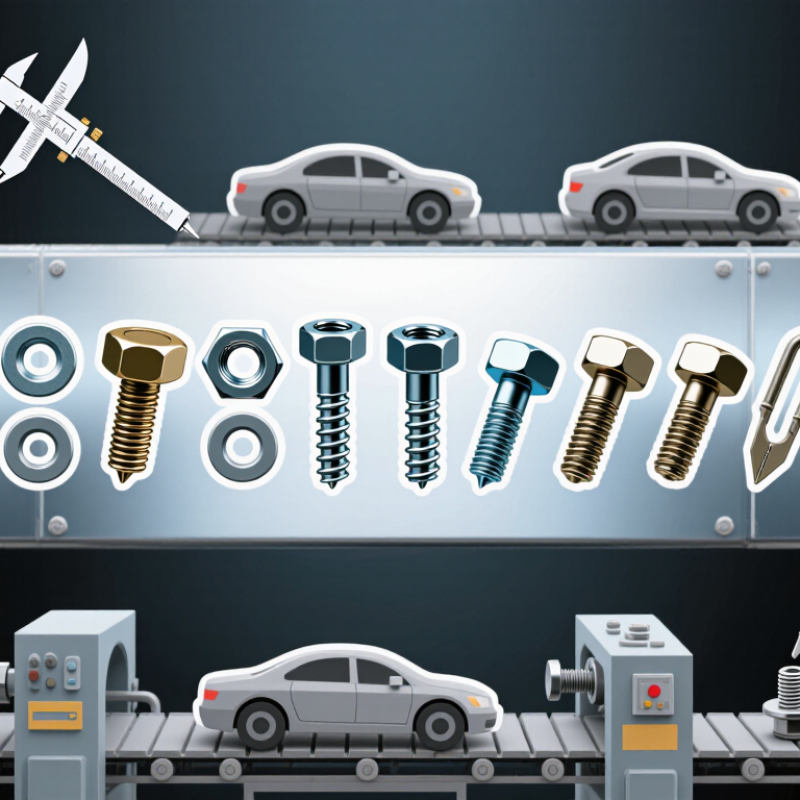
What Are Automotive Fasteners and Why Do They Matter?
China Top 10 Automotive Fasteners: How to Choose?
Automotive fasteners are small components with demanding responsibilities. They include bolts, nuts, screws, studs, clips, and rivets. Each one secures parts while facing vibration, heat, moisture, and repeated loading. A loose connection can cause noise, movement, leaks, or a serious safety concern. Size alone is not enough.
Choosing the right fastener starts with its location and purpose. Engine-bay hardware may require heat resistance, while underbody parts need stronger corrosion protection. Thread type, diameter, length, strength grade, and coating must match the repair specification. Correct torque matters as much as the fastener itself. Too little clamping force allows movement. Too much can damage threads or distort a component. That mistake is easy to miss. When sourcing parts from China, request material certificates, dimensional reports, and practical test records.
Tips: Check the service manual and measure the original part before ordering. Keep mating surfaces clean. Use a calibrated torque wrench. Do not mix unknown grades or coatings. Replace damaged threads instead of forcing a new fastener into them. Even experienced technicians can overlook corrosion under a washer or a slightly stretched bolt. Previous repairs may also make the original specification unclear. Document the installed size, grade, coating, and torque value.
China Top 10 Automotive Fasteners: How to Choose?
What Are Automotive Fasteners and Why Do They Matter?
Automotive fasteners include bolts, screws, nuts, studs, and other threaded components used to join vehicle parts.
Strength, corrosion resistance, temperature tolerance, weight, and service requirements should be considered when selecting a fastener.
The chart compares minimum tensile strength values for commonly used metric fastener property classes.
Higher tensile strength can support demanding loads, but correct sizing, tightening torque, corrosion protection, and compatibility with the joined materials are also essential.
Reference basis: ISO 898-1 for carbon and alloy steel fasteners and ISO 3506-1 for corrosion-resistant stainless steel fasteners.
The Top 10 Automotive Fastener Types Made in China
China Top 10 Automotive Fasteners: How to Choose?
The top 10 automotive fastener types made in China include hex bolts, flange bolts, wheel studs, lug nuts, U-bolts, prevailing-torque nuts, rivets, self-tapping screws, shoulder bolts, and plastic clips. Each type serves a different load, joint, or assembly condition. Hex and flange bolts suit chassis connections, while wheel studs and lug nuts require accurate thread control. Rivets and clips support lightweight interior and body panels.
China’s automotive output reached 31.28 million vehicles in 2024, according to the China Association of Automobile Manufacturers. OICA recorded about 93.5 million vehicles worldwide in 2023. These volumes increase the need for stable dimensions, repeatable torque, and clear batch traceability. Buyers should request material certificates, hardness results, coating specifications, and dimensional inspection records. Salt-spray testing helps assess corrosion resistance, but it cannot replace real vehicle testing.
Choose by load, temperature, vibration, installation access, and service life. A flange bolt may reduce assembly parts, but it can damage soft surfaces when over-tightened. Prevailing-torque nuts resist loosening, yet their reuse limits need confirmation. Do not judge quality by plating color alone. It looks convincing. In practice, missing torque-tension data remains a serious weakness. ISO, SAE, and customer-specific requirements should be checked before sampling, not after production problems appear.
How to Match Fasteners with Automotive Applications
China Top 10 Automotive Fasteners: How to Choose?
Matching fasteners to automotive applications starts with load, temperature, and corrosion exposure. A body-panel clip cannot replace a high-strength chassis bolt. For suspension joints, specify tensile class, preload control, and fatigue performance. SAE J429 and ISO 898-1 provide useful mechanical references, but the drawing remains decisive.
The U.S. Department of Energy reports that a 10% vehicle weight reduction can improve fuel economy by roughly 6–8%. Therefore, aluminum, coated steel, and high-strength fasteners may support lightweight design. Yet lower mass is not automatically better. Underbody bolts face water, salt, vibration, and stone impact. Use suitable corrosion protection, thread engagement, and torque-angle validation. For engine areas, check heat resistance and relaxation after thermal cycling.
Automotive production also demands repeatability. IATF 16949 practices support process control, traceability, and capability studies across fastener production. Confirm lot identification, hardness, coating thickness, and torque-tension results. Ask for PPAP documents and test evidence, not only a catalogue number. A 2024 market analysis by Grand View Research indicates continued growth in automotive fasteners, driven partly by vehicle production and lightweighting. More suppliers do not mean equal reliability. A practical mistake is selecting by price first; engineers sometimes discover that inconsistent friction changes clamping force. The better match may cost slightly more, but field failures cost far more.
How to Evaluate Quality, Materials, Standards, and Certifications
China Top 10 Automotive Fasteners: How to Choose?
When comparing China’s top-ten automotive fastener suppliers, start with measurable evidence. OICA reported 93.5 million motor vehicles produced worldwide in 2023. That scale demands stable batches, not attractive samples. Check tensile strength, yield strength, hardness, thread accuracy, and decarburization. ISO 898-1 defines mechanical requirements for carbon and alloy steel fasteners. SAE J429 may also apply to specific automotive applications. Ask for complete material certificates, heat numbers, and batch traceability.
Material selection should follow load, temperature, corrosion, and assembly conditions. Alloy steel suits high-strength joints, while stainless steel supports corrosive environments. Coating thickness matters, but excessive coating can affect thread fit. Hydrogen embrittlement requires special attention after electroplating. Independent laboratories should verify torque-tension performance, salt-spray resistance, and dimensional accuracy. ASTM B117 results help comparison, but they do not predict every vehicle environment.
Certifications need careful examination. ISO 9001 shows quality-system control, while IATF 16949 indicates stronger automotive process expectations. However, a certificate never proves every shipment is reliable. Confirm the issuing body, factory address, certification scope, and expiry date. IEA’s Global EV Outlook 2024 projected electric-car sales above 17 million in 2024, increasing demand for lightweight and vibration-resistant joints. Supplier audits should therefore include PPAP records, control plans, and process-capability data. A polished report can still miss production variation. Re-test samples from different lots. A cheaper fastener may become expensive after one failed assembly line.
How to Choose a Reliable Chinese Automotive Fastener Supplier
Choosing a reliable Chinese automotive fastener supplier requires more than comparing the lowest quotation. The top ten fasteners may include bolts, nuts, screws, studs, washers, clips, rivets, pins, wheel fasteners, and specialty threaded parts. Each item needs suitable steel, heat treatment, coating, and dimensional control. Ask whether the supplier follows ISO 9001 or IATF 16949 practices. Certificates matter. So does traceability.
Request material reports, inspection records, and sample parts before approving production. Check tensile strength, hardness, torque, thread accuracy, and coating thickness. For exposed components, review corrosion test results, such as salt-spray performance. A serious supplier should explain testing equipment clearly. Visit the factory if possible. Look at raw-material labels, calibrated gauges, and production records. Empty promises are easy.
Communication is another practical test. Send a drawing with tolerance notes and ask for a written review. Reliable engineers should identify unclear dimensions instead of accepting everything silently. Discuss tooling ownership, minimum order quantities, packaging, and corrective-action procedures. A polished factory tour can still mislead. I have learned that small sample inconsistencies often reveal larger process weaknesses. No supplier is perfect, and an honest supplier will admit a limitation and propose a measurable improvement. Keep approval records and test samples for every production change.
FAQS
Compare measurable evidence, not attractive samples. Review strength, hardness, thread accuracy, and decarburization results. Stable batches matter more than one impressive sample.
Alloy steel suits high-strength joints and heavy loads. Stainless steel helps exposed parts resist corrosion. Consider temperature, vibration, load, and assembly conditions before choosing material.
Request material certificates, heat numbers, inspection reports, and batch records. Confirm each document matches the factory and production lot. Missing records create uncertainty.
Coating thickness affects corrosion resistance and thread fit. Excessive coating may prevent proper assembly. Electroplating also requires controls against hydrogen embrittlement.
Use tensile, hardness, torque-tension, dimensional, and corrosion tests. Salt-spray results support comparisons but cannot represent every vehicle environment. Test parts from several lots.
Confirm the issuing body, factory address, certification scope, and expiry date. Quality-system certification supports confidence, but it does not guarantee every shipment. Verify actual production records.
Inspect raw-material labels, calibrated gauges, and production records. Review control plans, approval documents, and process-capability data. A polished tour can still hide variation.
Send a detailed drawing with tolerance notes. Reliable engineers should identify unclear dimensions before production. Discuss tooling ownership, order quantities, packaging, and corrective actions.
Not always. A cheaper fastener may cause assembly delays or rejected lots. Keep approval samples and retest after every production change. I may still overvalue a clean report. Samples vary.
Conclusion
Choosing the right automotive fasteners is essential for vehicle safety, assembly efficiency, durability, and long-term performance. This article explains what automotive fasteners are, why they matter, and introduces ten common fastener types manufactured in China, including bolts, nuts, screws, studs, washers, rivets, clips, and specialized retainers. Each type serves a different purpose, so selection should consider load requirements, vibration, installation method, accessibility, and environmental exposure.
The guide also explains how to choose fasteners for automotive assembly lines by matching materials, dimensions, strength grades, surface treatments, and thread specifications with specific applications. It highlights the importance of quality control, testing, industry standards, traceability, and relevant certifications. Finally, readers will learn how to evaluate Chinese suppliers through production capability, inspection systems, customization services, delivery reliability, technical support, and communication. These practical considerations can help buyers build a stable supply chain and select fasteners that deliver consistent quality and dependable automotive performance.

 VLC Part