Industrial fasteners play a crucial role in manufacturing and construction. Their quality directly impacts the safety and durability of structures. Various factors influence the quality of these essential components. Understanding "what factors affect the quality of industrial fasteners" is vital for industries relying on them.
Material selection is a primary aspect. High-grade steel can enhance tensile strength. A report from the Manufacturing Institute highlights that 70% of fastener failures result from material deficiencies. Processes like heat treatment also contribute to reliability. Moreover, dimensional accuracy is equally important. A fastener that does not meet specifications can lead to assembly failures.
Industry standards and certifications are critical for quality assurance. Organizations like ASTM International set benchmarks that manufacturers must adhere to. Estimates suggest that adhering to these standards can reduce failure rates by up to 30%. Despite these guidelines, inconsistencies still arise, indicating that continuous improvement in manufacturing practices is necessary. Quality control measures must evolve to address these challenges and enhance product reliability.
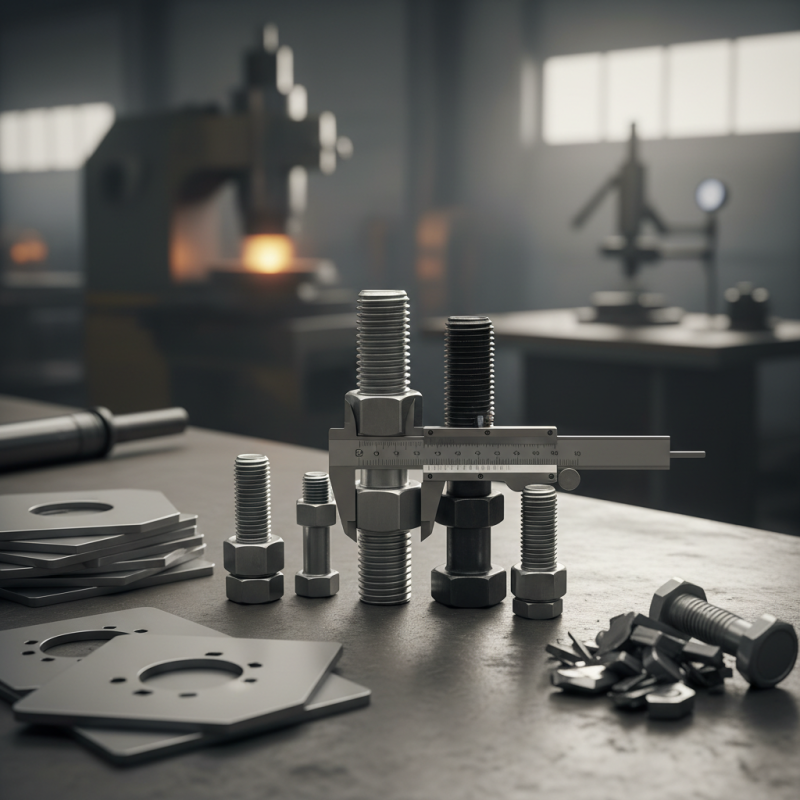
When selecting raw materials for industrial fasteners, several factors play a crucial role. The mechanical properties of the materials, such as tensile strength and corrosion resistance, significantly affect the fasteners’ performance. Steel is commonly chosen for its strength, while alloys can enhance specific characteristics. However, the cost of these materials cannot be overlooked. Often, manufacturers must balance performance with budget constraints, leading to tough decisions.
Environmental factors also influence raw material selection. Some fasteners need to withstand extreme temperatures or harsh conditions. This can lead to selecting more expensive, specialized materials. However, using these materials may not always be feasible; sometimes, cheaper options fail unexpectedly, raising concerns. It's essential to test these materials under intended conditions, which can be a daunting process.
Quality control is paramount. Each material batch should meet strict standards. Variability in raw materials can lead to inconsistencies. Engaging reliable suppliers and setting quality benchmarks can mitigate these risks. Yet, even then, imperfections may arise. Manufacturers must continually adapt and improve material selection processes to ensure the finished fasteners meet required specifications. This iterative approach fosters innovation in material science and can lead to improved outcomes over time.
The manufacturing processes of industrial fasteners play a crucial role in determining their overall quality. Each method has unique characteristics that can significantly affect performance and reliability. For example, forging processes typically lead to stronger fasteners due to the directional grain flow of the metal. However, improper temperature control during forging could lead to defects, affecting the mechanical properties of the final product.
Conversely, screw threads often undergo different treatments. Machining offers precision but may introduce stress concentrations if not executed properly. Heat treatment enhances hardness but can also introduce brittleness if the parameters are not monitored closely. Companies sometimes overlook the importance of process parameters, which can lead to variations in product quality. This variability can have long-term implications, especially in critical applications where failure is not an option. Careful attention to these processes is key to ensuring the reliability and durability of fasteners in various environments.
Design specifications play a crucial role in the performance of industrial fasteners. When engineers develop fasteners, precise parameters must be outlined. These include material selection, thread geometry, and tensile strength. According to a study by the International Fastener Institute, nearly 30% of fastener failures are linked to inadequate design specifications. This highlights the importance of meticulous planning.
The nuances of a fastener's design directly impact its efficiency and durability. For instance, using the correct coating can prevent corrosion and extend service life. Testing shows that fasteners with specialized coatings can last up to 50% longer in harsh environments compared to uncoated counterparts. Moreover, optimal thread specifications can affect load distribution, which is often overlooked during the design phase.
In a survey conducted by Fastener Technology International, 40% of respondents admitted to encountering performance issues due to overlooked design variables. These shortcomings can lead to costly production delays and risk failures in critical applications. Therefore, it's vital that design specifications are rigorously adhered to, ensuring reliability and safety in fastener performance.
Surface treatments play a crucial role in enhancing the durability of industrial fasteners. These coatings protect against corrosion and wear, extending fasteners' lifespan. Common techniques include galvanizing, anodizing, and powder coating. Each method offers distinct benefits and levels of protection, making it essential to choose the right one.
For instance, galvanizing involves coating steel with zinc. This method creates a barrier against moisture, slowing rust formation. Anodizing, often used on aluminum, forms an oxide layer that increases resistance to oxidation. Powder coating adds a protective finish, improving both appearance and durability. These treatments make fasteners more reliable in harsh environments.
Tips for selecting surface treatments include considering the environment in which fasteners will be used. High humidity or exposure to chemicals demands more robust protection. Additionally, evaluate the mechanical stress the fasteners will endure. Some treatments may not withstand heavy loads or repetitive stress. Testing small batches before full-scale usage can help identify potential shortcomings. Regularly inspecting fasteners for signs of wear or damage is equally important for long-term reliability.
Quality control is crucial in fastener production. It ensures that each fastener meets the required specifications. A minor defect can lead to significant failures in applications. This is especially true in industries like automotive and aerospace, where safety is paramount.
Implementing strict quality control measures is essential. Regular inspections can identify flaws early. Advanced testing methods, such as tensile tests, can assess durability. It's important to maintain a clean production environment to prevent contamination. Sometimes, the human element plays a role in quality lapses. Training and awareness can help mitigate these risks.
**Tip:** Regular audits of production processes can uncover hidden issues.
Involving employees in quality discussions fosters a culture of accountability. Workers on the ground often spot problems before management does. Collaborating with suppliers on quality standards can enhance reliability.
**Tip:** Encourage feedback from the production team to improve processes continually.
Ignoring quality control may save costs initially but will lead to significant issues later. Fastener failures can result in costly recalls or worse, accidents. Prioritizing quality control is not just a choice; it’s a necessity in industrial sectors.
: Design specifications include material selection, thread geometry, and tensile strength for fasteners.
Inadequate specifications can lead to 30% of fastener failures, impacting efficiency and safety.
Correct coatings prevent corrosion and can increase service life by up to 50% in harsh environments.
Proper thread specifications improve load distribution but are often neglected during the design phase.
Quality control ensures fasteners meet specifications; minor defects can result in significant failures.
Training increases awareness of quality issues, reducing lapses caused by human error.
Audits identify hidden problems and improve overall production processes efficiently.
Skipping quality checks may save costs but can lead to costly recalls or accidents later.
Involving workers encourages accountability and helps catch issues before they escalate.
A clean environment is crucial to prevent contamination and ensure the quality of fasteners.
The quality of industrial fasteners is influenced by a variety of factors, making it essential to understand what factors affect the quality of industrial fasteners. Firstly, the selection of raw materials plays a critical role, as the inherent properties of the material determine the fastener's strength and performance. Additionally, the manufacturing processes employed can significantly impact the final product, as variations in technique may alter the structural integrity and reliability of the fasteners.
Another crucial aspect is the design specifications, which dictate how well the fasteners will perform under specific conditions. Properly defined design parameters ensure that the fasteners meet functional requirements effectively. Furthermore, surface treatments are vital for enhancing durability and resistance to wear and corrosion, ultimately extending the fasteners' lifespan. Finally, the implementation of stringent quality control measures throughout production is essential to uphold consistent standards and minimize defects, thereby ensuring the overall quality of the industrial fasteners.

VLC Part