Top 5 Artificial Lift Technologies Explained
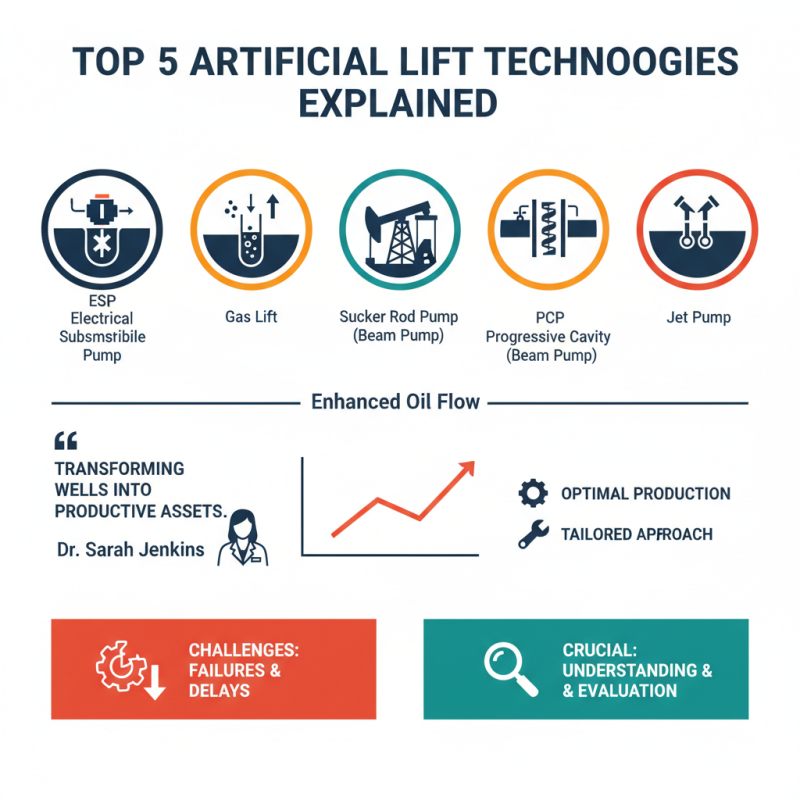
In the world of oil and gas production, Artificial Lift Technologies play a pivotal role. Dr. Sarah Jenkins, a leading expert in the field, once stated, “The right lift method can transform a struggling well into a productive asset.” This highlights the importance of choosing the appropriate technology for optimal production.
Artificial Lift Technologies include various methods designed to enhance oil flow from wells. These methods help lift liquids that would otherwise not flow naturally. Pumping systems and gas lift techniques are just two examples. Each technology has its unique advantages and challenges, creating a complex landscape for operators.
The industry is not without its imperfections. Technological failures can occur, leading to costly delays and reduced efficiency. Understanding the nuances of each type of artificial lift is crucial. Operators must evaluate the specific needs of their wells. A tailored approach could mean the difference between success and failure in production.
Overview of Artificial Lift Technologies
Artificial lift technologies play a crucial role in enhancing oil and gas production. These methods are used when reservoir pressure declines below the necessary level. In fact, about 90% of oil wells worldwide utilize some form of artificial lift, underscoring its importance to the industry. Various technologies exist, each with distinct applications and efficiencies.
Among these, gas lift systems allow for lifting oil through injected gas. This method is popular due to its efficiency at deeper well depths. A 2021 report noted that gas lift could increase production rates by over 30% in certain fields. On the other hand, electrical submersible pumps (ESPs) are effective for high-volume wells. However, they require regular maintenance and pose challenges related to power supply variations, leading to potential downtime.
Progress in artificial lift technologies continues. For instance, plunger lift systems are gaining traction for their simplicity and low operational costs. However, they might not be suitable for all conditions. Optimization is vital; relying on outdated methods can lead to subpar performance. Each lift technology presents unique benefits and drawbacks, and operators must assess their specific needs to improve production outcomes effectively.
Types of Artificial Lift Systems and Their Applications
Artificial Lift Systems are crucial in optimizing oil production. These technologies help lift fluids from wells where natural pressure is insufficient. The major types include Electric Submersible Pumps (ESP), Rod Pumps, and Gas Lift Systems. Each has unique advantages and is suited for different conditions.
Electric Submersible Pumps dominate the market with a global share of around 40%. They are efficient and can operate at depths reaching over 10,000 feet. However, they require significant maintenance, and failures can cause costly downtimes. Rod pumps, another popular choice, are most effective in shallow wells. They are less complex but can struggle with viscous fluids, leading to potential production losses. Gas lift systems provide flexibility, particularly in wells with fluctuating pressures. Nonetheless, they can be less efficient and may require continuous gas supply.
Choosing the right technology often involves trade-offs. Operators must balance initial investment costs against long-term operational efficiencies. Reports indicate that up to 30% of artificial lift installations do not meet performance expectations. These numbers highlight the importance of evaluating specific field conditions before deciding on a system. Each option has inherent challenges that must be understood for successful deployment.
Mechanisms of Operation for Each Technology
Artificial lift technologies play a crucial role in oil and gas production. Each technique operates based on distinct mechanisms, tailored to enhance fluid flow from reservoirs. One widely used method is the beam pump system. This method utilizes a surface-driven motor to create a reciprocating motion. The motion lifts the fluid, pushing it to the surface. However, the mechanical components often experience wear and tear, leading to maintenance challenges.
Another common technology is gas-lift. It employs gas, typically natural gas, to reduce fluid density. By injecting gas into the fluid column, the buoyancy increases, aiding in lifting the oil. Gas-lift systems offer flexibility for varying production rates. Still, they depend heavily on gas availability and pressure, creating potential operational hurdles.
Progressing cavity pumps (PCP) are also notable in the field. They consist of a helical rotor and a stator. This design allows for continuous and smooth fluid flow. However, they can face issues with solids in the fluid, which can lead to blockages. The ideal choice for an operation may vary. Each technology has strengths and weaknesses that require careful consideration.
Comparison of Efficiency and Cost Across Technologies
Artificial lift technologies are crucial for enhancing oil production from wells. A comparison of efficiency and cost across these technologies reveals significant insights. For instance, a recent report from the International Energy Agency indicates that gas lift systems can improve production rates by over 30%. However, initial setup costs can be higher than other methods, which may deter some operators.
On the other hand, rod pumps, one of the oldest artificial lift methods, tend to have lower upfront expenses. They are simpler and easier to maintain, yet they often yield lower efficiency in deeper wells. According to a study by the Society of Petroleum Engineers, rod pumps can only maintain an efficiency of about 60% in challenging environments. This raises questions about balancing cost with production needs.
Electric submersible pumps (ESPs) shine in high-volume applications. They can achieve efficiencies exceeding 90% in optimal conditions. Yet, issues arise in their installation and maintenance, making them less appealing for operators with budget constraints. A report from the Oil and Gas Journal highlighted that nearly 40% of failures in ESPs come from improper sizing or installation. This underscores the need for careful planning and knowledgeable personnel in the field.
Future Trends in Artificial Lift Technology Development
The future of artificial lift technology is both exciting and challenging. Engineers and researchers are focused on improving efficiency and sustainability. As energy demands grow, the need for innovative solutions becomes more pressing. New materials and automation are on the rise, but they come with complexities. For instance, integrating smart sensors can optimize performance but may lead to increased costs.
Collaboration is essential in this evolving field. Different sectors are merging ideas to enhance artificial lift systems. However, there is a risk that not all innovations will be practical. Some concepts may look great on paper but fail in real-world applications. Continuous testing and feedback are needed to refine these technologies.
Furthermore, environmental concerns cannot be ignored. The industry must balance operational efficiency with ecological impact. Some advancements may reduce emissions but also lead to excessive energy use. It's crucial to reflect on these trade-offs. The path ahead is not straightforward, but it holds promise. There is potential for smarter, more sustainable practices.
Top 5 Artificial Lift Technologies - Performance Comparison
This chart displays the performance efficiency of the top 5 artificial lift technologies based on various factors such as cost-effectiveness, installation time, maintenance requirements, and energy efficiency.

