What is Precision Bearings and How Do They Work?
Precision bearings are essential components in various industries, providing high accuracy and reliability. According to a recent report by MarketsandMarkets, the precision bearings market is projected to reach $13.5 billion by 2026. This growth reflects the increasing demand for automation in industries like aerospace, automotive, and manufacturing.
These bearings minimize friction and enhance performance, playing a critical role in machinery. Their design allows for tighter tolerances, improving efficiency. However, not all precision bearings are created equal. Variations in materials, manufacturing processes, and design can lead to significant performance differences.
Challenges remain in ensuring optimal maintenance and selection for specific applications. A survey by the ABMA indicates that many users underestimate these factors. Consequently, improper choices may lead to operational failures, which can impact production timelines. Understanding the intricacies of precision bearings is crucial for maximizing their potential in modern machinery.

What Are Precision Bearings?
Precision bearings are crucial components in various machines. They are designed to reduce friction and enhance efficiency. Typically made from high-quality materials, they ensure better accuracy in movement. These bearings support rotating shafts while maintaining tight tolerances. This is essential for machines that require precision.
There are different types of precision bearings. Each type has its unique features and applications. For instance, angular contact bearings can handle both radial and axial loads. This makes them versatile for many uses. On the other hand, deep groove ball bearings are popular for their simplicity. They are easy to install and maintain. While many gravitate toward these common types, you should consider the specific requirements of your application.
Sometimes, selecting the right type can be challenging. Choosing the wrong bearing can lead to performance issues. This might cause excessive wear and tear over time. It’s essential to research and reflect on your choices carefully. A mistake in selection could lead to costly downtime or repairs. Always analyze your operational requirements before finalizing a decision.
Types of Precision Bearings and Their Applications
Precision bearings play a crucial role in various industries, from aerospace to manufacturing. They ensure smooth operation and reduce friction in rotating components. There are several types of precision bearings, each designed for specific applications.
Ball bearings are among the most commonly used types. They can handle both radial and axial loads effectively. In contrast, roller bearings are better suited for heavy loads due to their larger contact area. A recent industry report highlights that ball bearings can improve equipment efficiency by up to 25%. This efficiency boost is critical in industries where every second of downtime costs money.
Tip: When selecting bearings, consider the environment they will operate in. Factors such as temperature and moisture can affect performance.
Another type is thrust bearings, used mainly to manage axial loads. These bearings keep components aligned and reduce wear. According to studies, proper alignment can extend the life of bearings by 50%. Yet, misalignment is a common oversight that can lead to premature failure.
Tip: Regular maintenance and inspection can prevent alignment issues. Make sure to check for signs of wear on a routine basis.
Understanding the different types of precision bearings and their applications is essential. Proper selection and maintenance can save time and resources in the long run. However, neglecting these details can lead to significant problems, which is an area worth reflecting on.
The Manufacturing Process of Precision Bearings
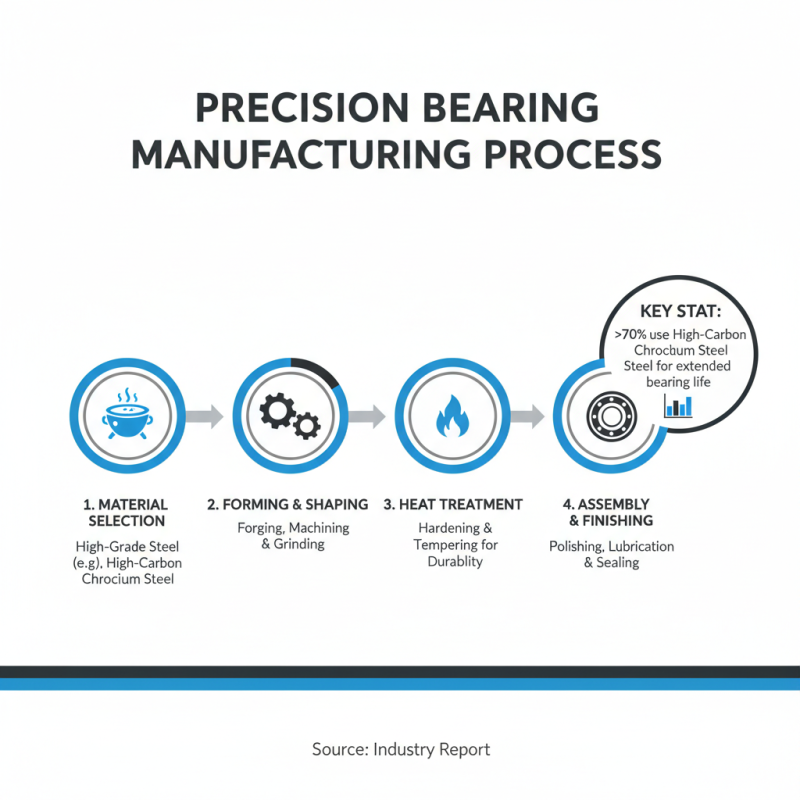
The manufacturing process of precision bearings is intricate and requires high levels of accuracy. Typically, it involves several key stages, beginning with material selection. Generally, high-grade steel is preferred for its durability and performance. According to an industry report, over 70% of precision bearings are produced using high-carbon chromium steel, which enhances bearing life.
Machining is the next step, where raw materials are shaped into exact dimensions. CNC machines are often used for this task. These machines provide high precision and consistency, which is critical in bearing production. A recent analysis indicated that precision in machining can reduce failure rates by almost 30%. Even minor errors can derail the functionality of bearings.
After machining, components undergo heat treatment. This process improves hardness and wear resistance. However, achieving the ideal balance between hardness and toughness remains a challenge. Many manufacturers still report inconsistencies, leading to discarded components during quality checks. Measurement techniques, such as laser scanning, help mitigate these issues, but they are not foolproof. The quest for perfection in precision bearing manufacturing is ongoing.
How Precision Bearings Improve Machinery Performance
Precision bearings are crucial in enhancing machinery performance. They provide reduced friction and improve rotation accuracy. This allows machines to operate more efficiently. When components move smoothly, energy consumption decreases. Thus, machinery can achieve higher speeds with consistent quality.
Using precision bearings can extend the lifespan of your equipment. They maintain tight tolerances and withstand heavy loads. This protects critical machinery from wear. However, improper installation can lead to high failure rates. Regular maintenance and proper alignment are essential.
Tips: Always check the specifications before use. Ensure that bearings match their application. Consider environmental factors, like temperature and humidity. These can affect performance. If you notice unusual noises, inspect the bearings promptly. Small issues can escalate quickly. Being proactive saves time and costs.
How Precision Bearings Improve Machinery Performance
Key Factors Influencing Precision Bearing Selection and Maintenance
Precision bearings play a crucial role in machinery performance. Selecting the right precision bearing requires careful consideration. Several factors influence this decision, including load capacity, speed, and operating environment. Each aspect directly impacts the bearing's efficiency and lifespan.
Maintenance is equally important. Regular inspections can prevent issues. Lubrication, cleanliness, and proper installation are key to longevity. Without these practices, bearings can fail prematurely. Dirt and debris can cause excessive wear.
Tips: Always keep a log of maintenance tasks. This helps track performance over time. Consider using sensors for real-time monitoring. They can provide alerts before issues arise. A proactive approach makes all the difference. Be mindful of your bearing choices and maintenance habits. Each decision counts in achieving optimal performance.
What is Precision Bearings and How Do They Work? - Key Factors Influencing Precision Bearing Selection and Maintenance
| Attribute |
Description |
Impact on Performance |
| Material |
Common materials include stainless steel, ceramics, and polymer composites. |
Affects durability, load capacity, and corrosion resistance. |
| Load Rating |
The maximum load a bearing can handle before failure. |
Critical for ensuring safe operation under expected conditions. |
| Speed Rating |
The maximum speed at which the bearing can operate effectively. |
Influences efficiency and heat generation in applications. |
| Clearance |
The space between the bearing components which allows for thermal expansion and lubricant flow. |
Affects noise, vibration, and longevity of the bearing. |
| Lubrication |
Can be grease or oil, crucial for reducing friction and wear. |
Directly influences the bearing's lifespan and reliability. |
| Sealing Type |
Options include shielded, sealed, or open, determining protection against contaminants. |
Impacts the bearing performance in harsh environments. |
| Mounting Precision |
The alignment and fitting of the bearing in its housing. |
Essential for minimizing vibration and enhancing load distribution. |